온라인강의
강사명Seonghwan Hwang
강의시간22분
강의개설일2025-12-10
강의소개
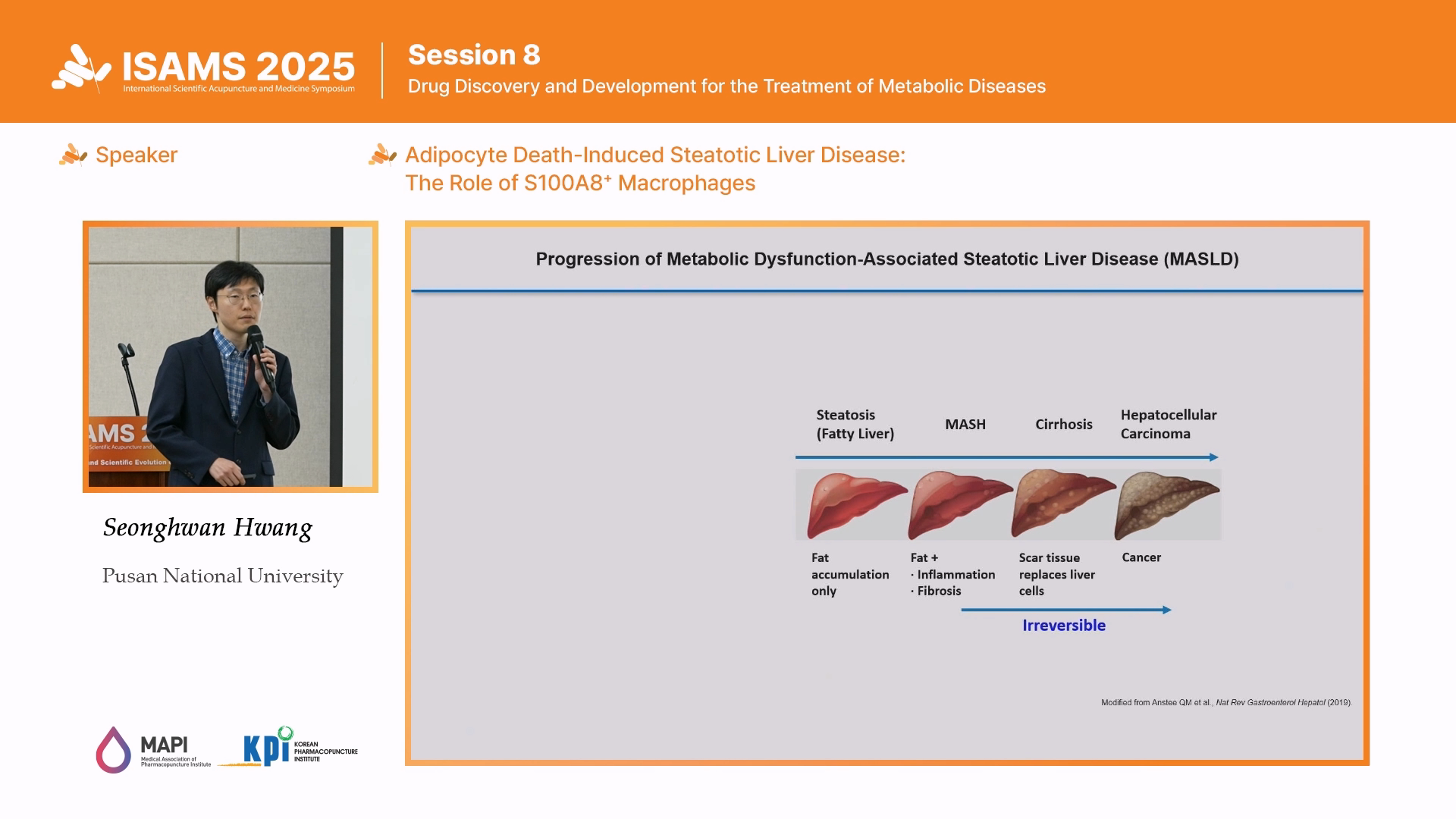
Objective: Both adipocytes and hepatocytes have the capacity to store fat, but the factor(s) that determine
fat distribution between these cell types remain unknown. In mice fed a high-fat diet, fat initially accumulates
predominantly in adipocytes, while hepatic fat accumulation mainly emerges after the onset of epididymal adipocyte
death that results in elevated free fatty acids to promote lipid accumulation in hepatocytes. However, it remains unclear
whether other signals following adipocyte death are required to direct and/or promote hepatocytes to store fat and
subsequently trigger metabolic dysfunction-associated steatotic liver disease (MASLD).
Methods and Results: Using genetically modified mouse models combined with bulk and single-cell RNA sequencing
analysis, we demonstrated that visceral adipocyte death induces an accumulation of S100A8+ macrophages in the
liver, which is partially induced by fatty acids. Macrophage-specific deletion of the S100a8 gene reduced hepatic fat
accumulation and MASLD severity in mice. Mechanistically, S100A8+ macrophages suppress cellular communication
network factor (CCN3), a negative regulator of CD36, thereby enhancing CD36 expression in hepatocytes.
Conclusion: Visceral adipocyte death promotes hepatic infiltration of S100A8+ macrophages, which drive hepatocyte
lipid storage and subsequently promote MASLD progression through CD36 upregulation, partially mediated by CCN3
suppression.
강사소개
Dr. Seonghwan Hwang is an Associate Professor in the College of Pharmacy at
Pusan National University. He completed his undergraduate and master’s studies in pharmacy
at Seoul National University and received his Ph.D. from the University of Texas Southwestern Medical Center. His
research explores the pathogenic mechanisms underlying metabolic liver diseases.