온라인강의
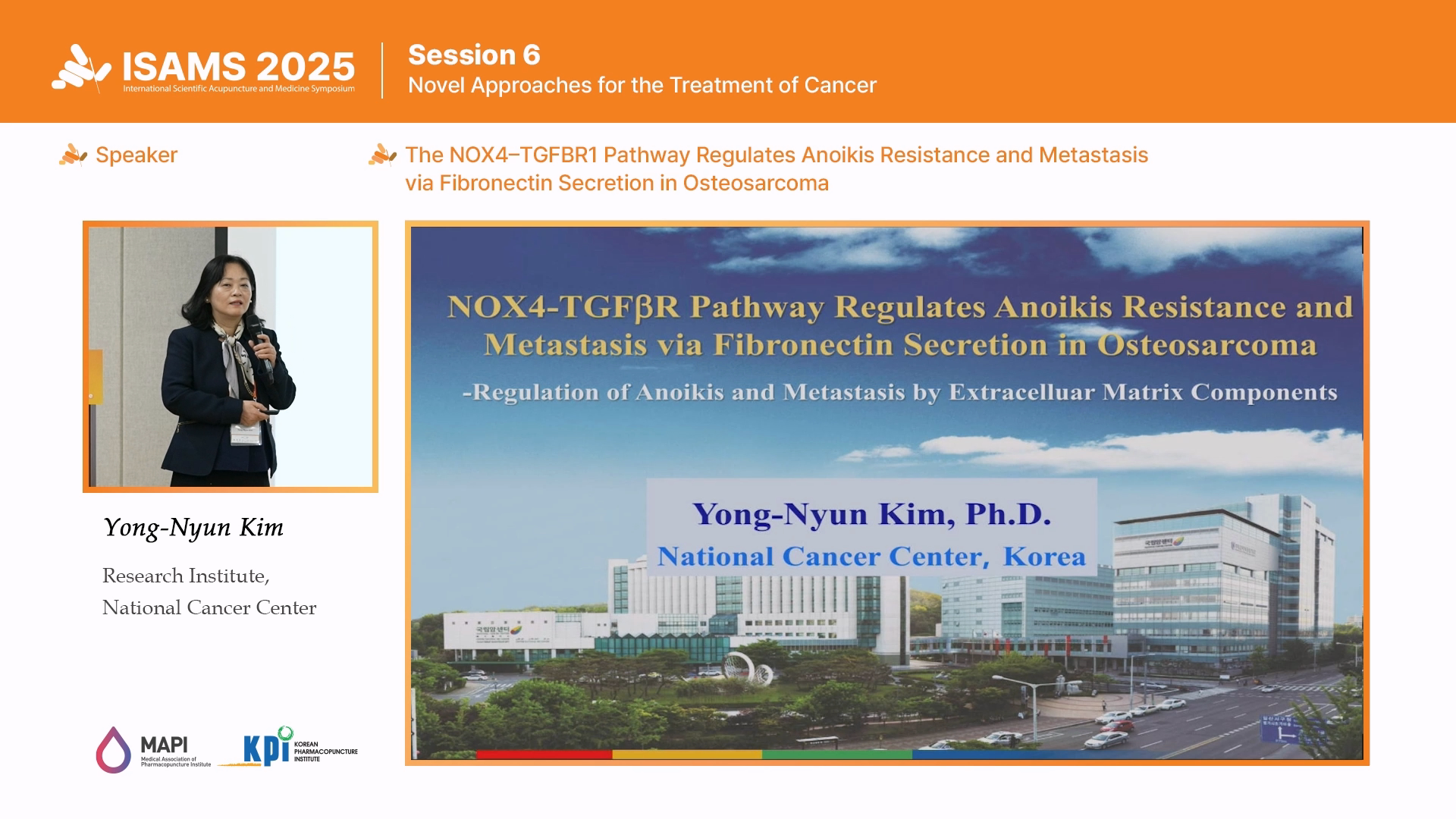
강사명Yong-Nyun Kim
강의시간19분
강의개설일2025-12-10
강의소개
Objectives: Osteosarcoma is a rare but aggressive bone tumor with limited therapeutic options and poor survival
outcomes. The molecular mechanisms driving metastasis remain unclear. This study investigates regulators of anoikis
resistance, a critical step in osteosarcoma metastasis.
Methods: Osteosarcoma cells were cultured under attached or suspended conditions, followed by anoikis assays,
RNA-seq, and immunoblot analyses. Candidate regulators were knocked down or overexpressed and tested for effects
on anoikis. Their roles in metastasis were evaluated using a mouse model. Clinical relevance was assessed by IHC on
patient tissues, survival analysis, and public datasets.
Results: RNA-seq revealed upregulation of ECM-related pathways under suspension. Suspended osteosarcoma cells
formed aggregates and acquired anoikis resistance. FN, TGFBR1, and NOX4 promoted aggregation and resistance;
their knockdown impaired both, while exogenous FN restored resistance. TGFBR1 inhibition reduced FN expression
and induced anoikis, rescued by TGFBR1 overexpression. NOX4 inhibition downregulated FN and TGFBR1, whereas
NOX4 overexpression upregulated both and enhanced resistance. In vivo, knockdown of FN, TGFBR1, or NOX4
reduced lung metastases. Patient tissues showed positive correlations among NOX4, TGFBR1, and FN, and higher
expression correlated with poor survival.
Conclusions: The NOX4–TGFBR1–FN axis promotes anoikis resistance and metastasis in osteosarcoma. Targeting
this pathway induces anoikis and suppresses metastasis, highlighting its potential as a therapeutic target.
강사소개
I am a Tenured Principal Scientist and Deputy Director at the Research Institute,
National Cancer Center, Korea. I earned my Ph.D. in Biomolecular Chemistry, Endocrinology,
and Reproductive Physiology from the University of Wisconsin-Madison, following an M.S. and B.S. in Biology from
Ewha Womans University, Korea. My professional career includes postdoctoral training at the University of Wisconsin
Madison, a BK Research professorship at Seoul National University, and more than two decades of scientific leadership
at the National Cancer Center, Korea.