온라인강의
강사명Yoshito Kumagai
강의시간29분
강의개설일2025-12-10
강의소개
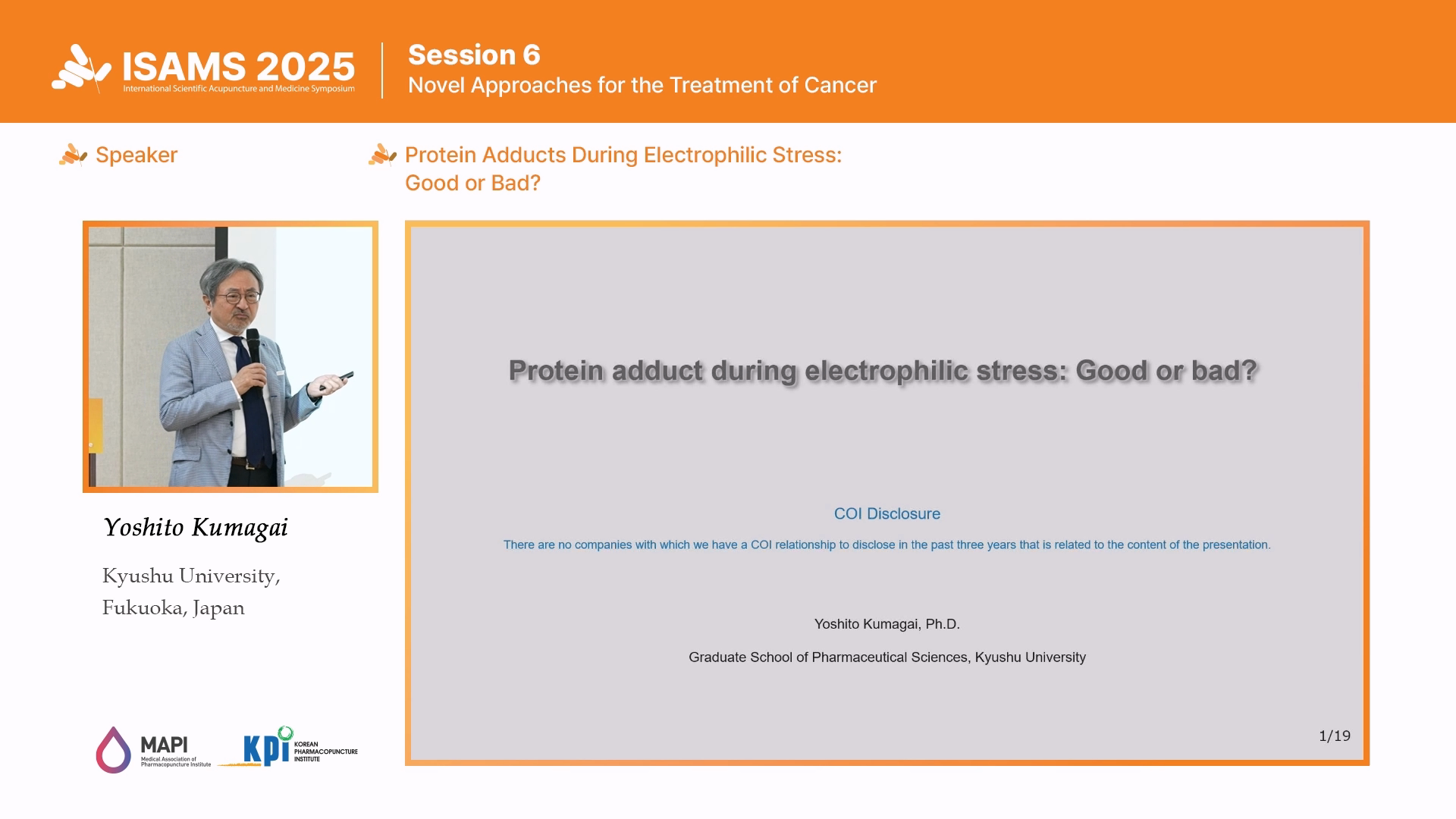
We are exposed to a variety of electrophiles such as aromatic hydrocarbon quinones formed during combustion of gasoline,
crotonaldehyde in tobacco smoke, methylmercury accumulated in fish, cadmium contaminated in rice, and acrylamide in
baked foods on a daily basis, and the molecular target for these electrophiles in the body are macromolecule nucleophiles.
There are various redox signaling pathways consisting of sensor proteins with reactive cysteine residues and effector molecules
(e.g., kinase and transcription factor) in cells, and the effector molecules are negatively regulated by the sensor proteins in basal
condition. We found that environmental electrophiles selectively and covalently modify sensor proteins such as protein tyrosine
phosphatase 1B (PTP1B), kelch-like ECH-associated protein 1 (Keap1), heat shock protein 90 (HSP90) and phosphatase and
tensin homolog deleted from chromosome 10 (PTEN), resulting in inhibition of their activities at lower concentrations, thereby
activating effector molecules such as epidermal growth factor receptor (EGFR), NF-E2-related factor 2 (Nrf2), heat shock factor
1 (HSF1) and protein kinase B (Akt). However, activated redox signaling pathways are disrupted by environmental electrophiles
at higher concentrations due to nonselective and extensive modification of cellular proteins, leading to cellular toxicity. We
therefore suggest that electrophiles have two different aspects in term of redox signaling pathways.
강사소개
Specially Appointed Professor, Graduate School of Pharmaceutical Sciences,
Kyushu University, Japan
Dr. Yoshito Kumagai received his Ph.D. in Drug Metabolism and Toxicology from Fukuoka University, Japan, in 1988. He
completed his postdoctoral training at the Department of Molecular Pharmacology, UCLA School of Medicine, USA, and has
since held academic positions at the University of Tsukuba, where he served as Professor and Director of the International Joint
Degree Master’s Program in Agro-Biomedical Science in Food and Health. Currently, he is a Specially Appointed Professor at
Kyushu University. Dr. Kumagai is internationally recognized for his pioneering research on environmental electrophiles, redox
signaling, and reactive sulfur species in toxicology. His studies have elucidated molecular mechanisms underlying oxidative
stress and electrophilic toxicity, contributing to the advancement of redox biology and environmental health sciences. He has
served as Editor-in-Chief of the Journal of Health Science, Associate Editor of Toxicological Sciences, and Executive Committee
Member of the International Union of Toxicology (IUTOX). Dr. Kumagai has received numerous awards, including the Tetsuo
Satoh Award (2024), the Tanabe Award (2016), and the Merit Award (2018) from the Japanese Society of Toxicology.