온라인강의
강사명Sanghun Lee
강의시간23분
강의개설일2025-12-10
강의소개
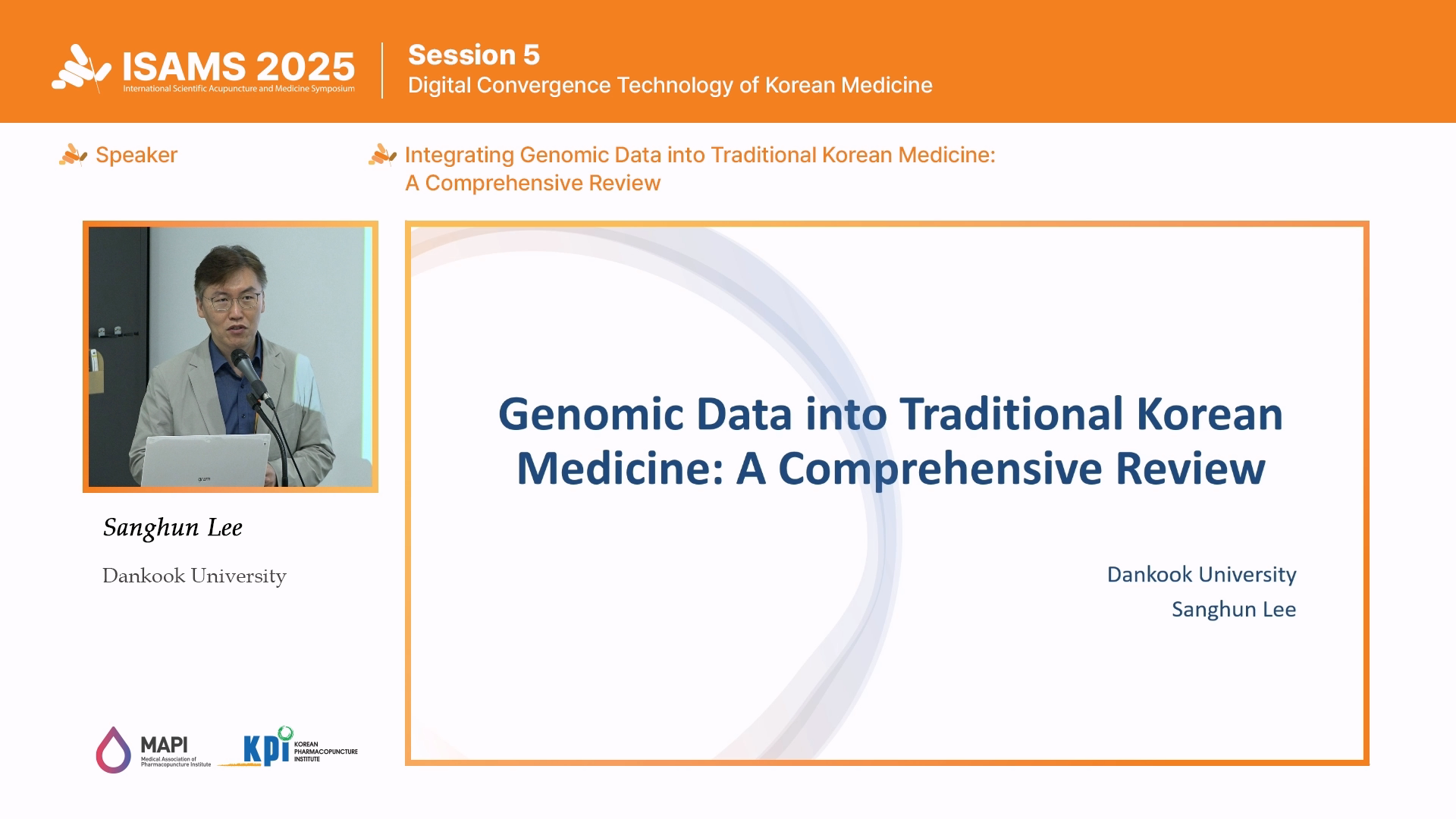
Traditional Korean Medicine (TKM) has historically focused on personalized care, an approach that aligns with the principles of
modern precision medicine. Recent advances in “”omics”” technologies, such as genomics and metabolomics, are helping to
validate and refine these traditional methods. For example, studies have shown that Sasang constitutional types have a moderate
heritability of around 40–55% and are linked to specific genetic markers that influence metabolic and neuroendocrine functions.
Pharmacogenomic research is also revealing how a person’s genetics can predict their response to TKM treatments. Specific genetic
variants, like COMT Val158Met and OPRM1 A118G, have been found to affect how well acupuncture works for pain relief. Another
variant, HLA-B*35:01, is associated with a higher risk of liver injury from certain herbal medicines.
New research initiatives are combining standardized TKM diagnostics with comprehensive genetic and metabolic data. This
information is being used to train machine-learning models to objectively classify a person’s constitution and predict how they will
respond to treatment.
Despite this progress, several challenges remain. The field needs to standardize diagnostic criteria, expand research to include more
diverse ethnic groups, and develop better tools for data analysis. It also needs to provide training for clinicians in genomics and
establish clear ethical and regulatory guidelines. Nevertheless, these early findings show promise, demonstrating that an integrated,
data-driven future for TKM could lead to more precise, effective, and safer treatments.
강사소개
CURRENT APPOINTMENTS
Professor / Department of Bioconvergence and Engineering, Graduate School, Dankook University
Internal Medicine, Bioinformatics on genome and omics, Epidemiological analysis on public health data
EDUCATION
B.S., Chemistry, College of Science, Yonsei University
KMD., College of Korean medicine, Kyunghee University
M.S., Dep. of Internal medicine, College of Korean medicine, Kyunghee University
M.S., Dep. of Bioinformatics and Statistics, Graduate School, Korea National Open University
Ph.D., Dep. of Internal medicine, College of Korean medicine, Kyunghee University