온라인강의
강사명Young-Joon Surh
강의시간27분
강의개설일2025-12-10
강의소개
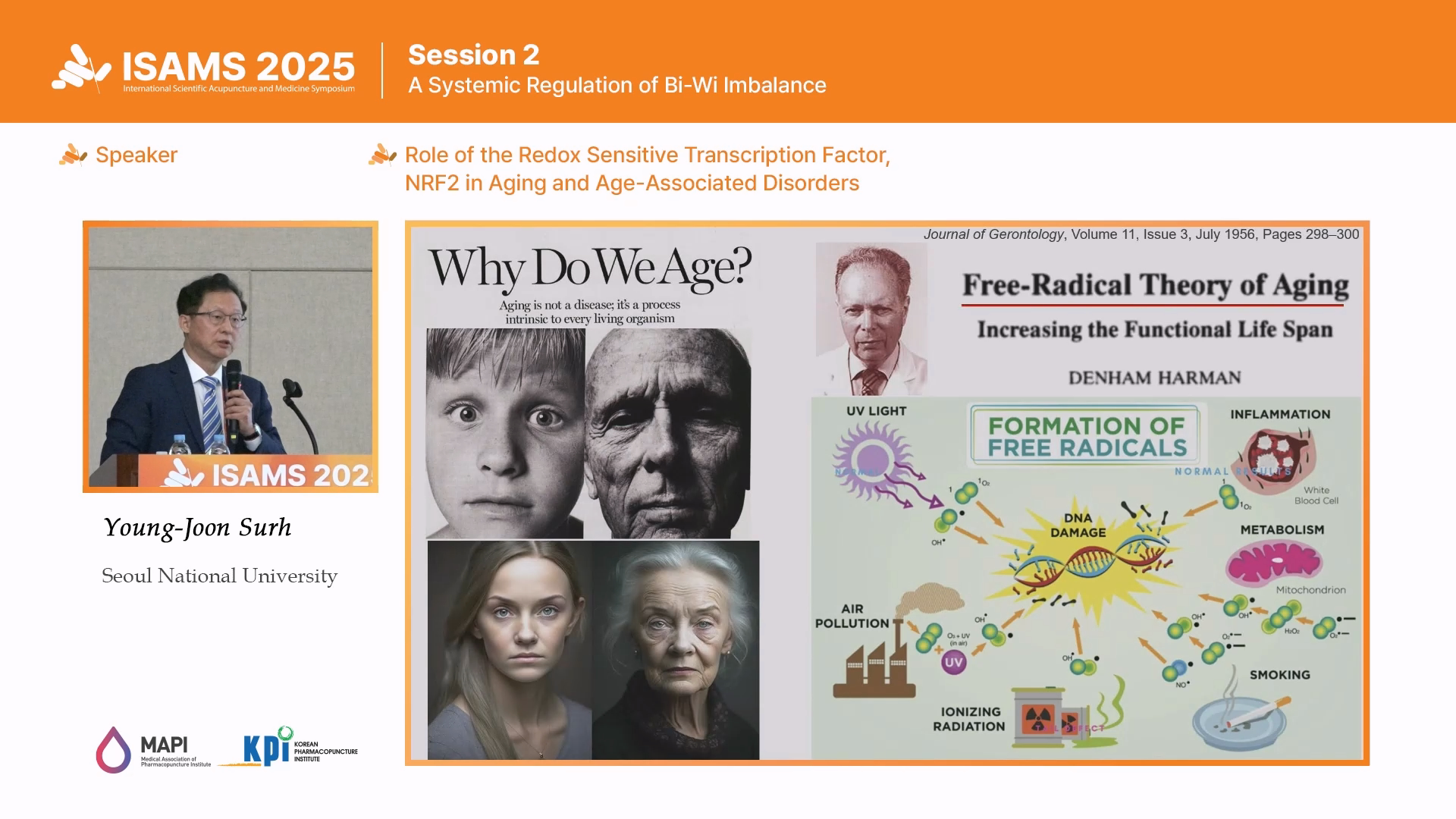
Uncontrolled intracellular generation and accumulation of reactive oxygen species (ROS) can alter the body’s
homeostasis. The resulting oxidative stress has been considered as a root of aging and many age-associated human
disorders. These include Alzheimer disease, atherosclerosis, coronary heart disease, chronic obstructive pulmonary
disease, diabetes, etc. It is noticeable that the aging process attenuates adaptive response to oxidative stress.
Moreover, oxidative damage to DNA can cause mutagenic change, which potentially initiates cancer development.
Numerous small molecules including antioxidant vitamins have exhibited therapeutic potential in preclinical studies. The
transcription factor nuclear factor (erythroid-derived 2)-like 2 (NRF2) is the master regulator of cellular cytoprotective
defenses, including the carcinogen detoxification, protection against oxidative stress and inflammation, a maintenance
of stability of proteins and removal of damaged proteins via proteasomal degradation or autophagy. NRF2 may also
play a role in regulating species longevity as well as preventing carcinogenesis. Thus, a constitutively upregulated
cytoprotective response mediated by NRF2 is commonly observed in naturally long-lived species and experimental
models of extension to lifespan. In this context, NRF2 is the guardian of healthspan, protecting against many age-related
pathogenic complications. The transcriptional activity of NRF2 and its target gene expression are likely to decline with
aging. Use of NRF2 activators by natural products may be a viable approach for improving health- related outcomes.
강사소개
Prof. Young-Joon Surh graduated from College of Pharmacy, Seoul National
University with Bachelor’s and Master’s degrees. He gained a PhD degree at the University of
Wisconsin-Madison, and had postdoctoral training at Massachusetts Institute of Technology (MIT). Prof. Surh then served
as Assistant Professor at Yale University School of Medicine before he relocated to Korea. His research focuses on the
molecular mechanisms of cancer chemoprevention with natural products. Prof. Surh is currently Editor-in-Chief of Journal
of Cancer Prevention; Associate Editor of Toxicology & Applied Pharmacology, Molecular Carcinogenesis, Free Radical
Research, and Journal of Ovarian Research; Honorary Editor of Journal of Traditional & Complementary Medicine; and
Editorial Board member of International Journal of Cancer, Cancer Letters, Free Radical Biology & Medicine, Antioxidants &
Redox Signaling, Oxygen, Genes & Disease, Genes and Nutrition, Molecular Nutrition & Food Research, and many others.
Prof. Surh has published more than 450 papers in peer-reviewed international journals. The total number of citations of his
publications is about 40,000 with H-Index 100 (Scopus). Thomson Reuter selected him as one of the 16 most highly cited
Korean scientists. Prof. Surh received Elizabeth C. Miller and James A. Miller Distinguished Scholar Award from Rutgers
University, McCormic Science Institute Award from American Society for Nutrition, the Korea Science Award given by the
President of South Korea, and many more. He is a member of the Korean Academy of Science and Technology.